Jigsolitaire Master Puzzle
- 4.6
- Rating
- 100.00K
- Installs
- Free
- Price
 Analysis by App-foxy
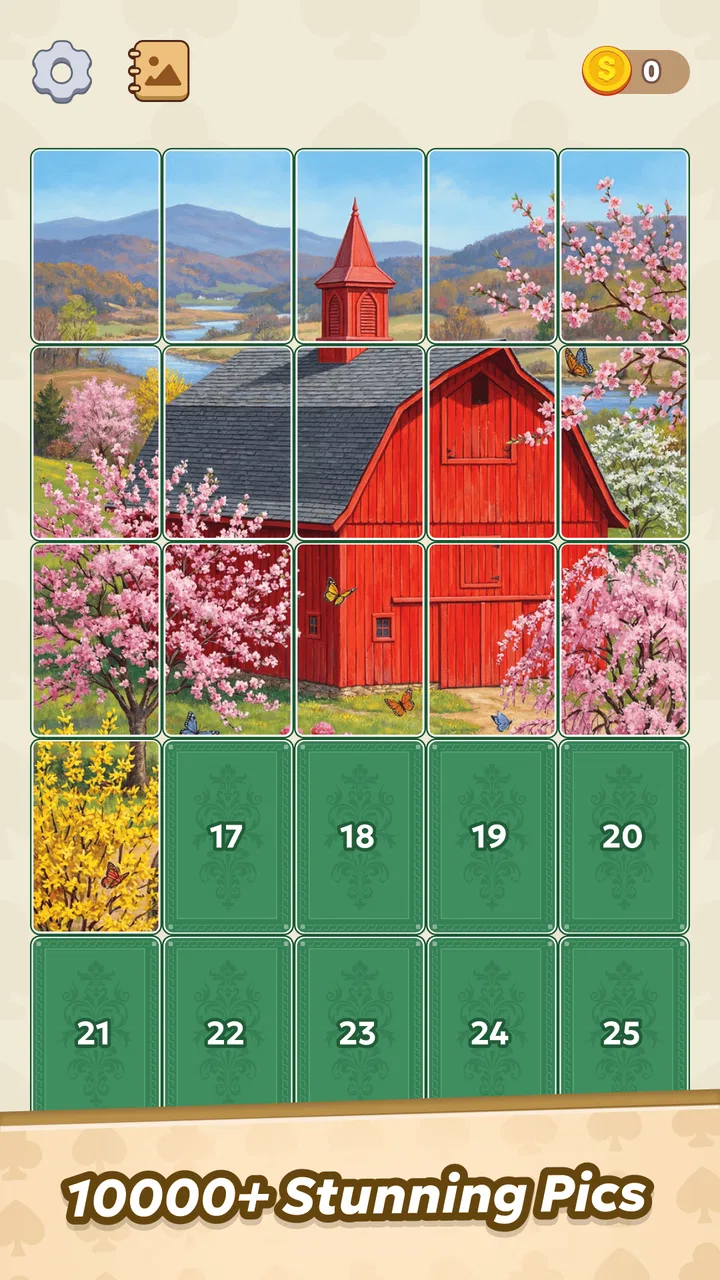
I found Jigsolitaire Master most interesting because it puts two familiar board-game ideas into the same activity: arranging a jigsaw image while following the rhythm of solitaire. That combination sounds simple, but it changes the mood of both genres. A normal jigsaw asks me to focus on shapes and visual matching, while solitaire usually asks me to plan a sequence of moves. Here, the appeal comes from switching between those two kinds of attention without leaving the same puzzle session.
Mint XX Games presents the game as a free board title for Android, and the result feels aimed at people who want a calm, approachable pastime rather than a demanding competitive game. The store summary highlights attractive pictures, but the more important point for me is how the image-building layer gives solitaire a stronger sense of progress. I am not merely clearing cards or placing pieces; I am gradually revealing something recognizable.
The game has an average rating of 4.7 from over 800 ratings, with more than 100 written reviews, and it has passed 100K installs. Those figures suggest that the central idea has found an audience, but they do not replace personal fit. If you enjoy quiet visual puzzles, this is worth considering. If you want fast card matches, deep strategy, or a traditional jigsaw with complete control over every piece, the blend may feel less satisfying.
You May Also Like

 Blood Strike: 2.5 Anniversary
Blood Strike’s Loadouts Turn Every Drop Into a Tactical Gamble
A close look at Blood Strike’s custom loadouts: how fast access to signature weapons reshapes its battle royale rhythm, rewards preparation, and narrows the gap between fights.

 Pandora - Music & Podcasts
Pandora’s Music Is Easy to Start, but Harder to Recover
Pandora’s strength is its low-effort path from a seed to a station. Its weak spot is how much confidence it asks you to place in connection, setup, and quiet recovery.

 8 Ball Pool
 Is Built on Rivalries, Rematches, and Routine
A close look at the rivalries, rematches, shared routines, and unanswered safety questions that turn a quick pool match into a persistent mobile community.

 Samsung Music
’s Quiet Strength Is Playing What You Already Own
Its reach comes less from spectacle than from dependable access to a personal library. That simplicity is both the app’s strongest retention engine and its ceiling.

 AccuWeather: Weather Radar
AccuWeather Review: A Quick, Clear Forecast for Everyday Decisions
For everyday plans, the best forecast is the one you can understand quickly. AccuWeather makes rain timing, radar, and local conditions easy to act on, with a few trade-offs.

 Hill Climb Racing
Why Hill Climb Racing Still Turns Crashes Into One More Run
A tiny car, a bumpy hill and one more upgrade: Hill Climb Racing keeps resurfacing because its simple chaos makes every near-miss feel personal.
More From Our News Desk
View All News


Why the jigsaw-and-solitaire combination matters
The verified capability that defines this game is the combination itself. It is not just a solitaire game with decorative artwork, and it is not simply a digital jigsaw with cards placed around it. The two activities support different types of concentration. Solitaire gives me a short-term decision to make, while the puzzle image gives that decision a visible long-term purpose.
That distinction matters during ordinary breaks. When I have only a few minutes, a conventional jigsaw can feel inconvenient because I need time to inspect a large collection of pieces. A standard solitaire round can be easy to start but may also feel repetitive after several hands. Jigsolitaire Master sits between them. The card-style interaction provides an immediate entry point, while the emerging picture gives me a reason to continue.
The strongest feature is the change in motivation: each small move belongs to a larger visual result. I found that useful when I wanted something relaxing but still wanted a sense of direction. The image turns a sequence of modest decisions into a more tangible project.
This also explains why the game belongs naturally in the board category. It is built around orderly placement, pattern recognition, and incremental progress rather than reflexes. I would not approach it as an action title or a social competition. Its appeal is quieter and more personal, especially for players who like puzzles that let them think at their own pace.
How the two puzzle habits complement each other
Jigsaw solving is usually spatial. I look for edges, colors, repeated textures, and shapes that belong together. Solitaire is more procedural. I consider which move opens another option and which move might block a better sequence. Combining them creates a useful alternation: when the card decisions become routine, the picture adds visual interest; when the image work becomes difficult, the card structure offers a more familiar task.
That balance is also the main reason not to judge the game by either genre alone. Someone expecting a full-featured solitaire app may find the picture element distracting. Someone expecting a traditional jigsaw may find the card layer less direct than simply dragging pieces into place. The experience works best when the player genuinely enjoys both sides of the idea.
For me, the visual theme is not merely decoration. It helps prevent the game from feeling like an endless chain of identical card layouts. At the same time, the solitaire structure stops the image work from becoming an open-ended search through loose fragments. Each side gives the other a little more shape.
What playing it feels like in practice
In use, I would treat each session as a sequence of small commitments rather than one large puzzle marathon. I start with the card decisions in front of me, then watch how those choices contribute to the image. That makes the game easy to pick up without requiring a long explanation. The basic concept is readable from the first interaction: make sensible moves, keep the board organized, and work toward a clearer picture.
The most useful habit is to resist playing every available move immediately. In a solitaire-style layout, an obvious move is not always the best move if it prevents another card from becoming available. I found it better to pause briefly, inspect the visible options, and choose the move that preserves flexibility. This is a small adjustment, but it makes the experience feel more thoughtful and reduces the sense that I am simply tapping whatever is highlighted.
The jigsaw side rewards a different habit. Instead of trying to understand the entire picture at once, I pay attention to distinctive visual areas. Strong color changes, recognizable outlines, and clear boundaries are easier anchors than broad sections with similar tones. Working from those anchors makes the picture feel less vague and gives me a reliable way to judge progress.
That combination creates a practical workflow. I use the card layer to maintain momentum, then use the emerging image to orient myself when the board feels visually busy. If I get stuck, I do not keep repeating the same approach. I switch attention: first I reconsider the available card sequence, then I return to the visual structure and look for a more distinctive area. This alternating method is more effective than treating the two elements as separate games.
A useful routine for short sessions
For a short break, I would set a modest goal rather than expecting to finish a picture. I might focus on making a few careful card choices and identifying one new visual section. That keeps the session satisfying even when I need to stop unexpectedly. The game’s free price also makes it easy to try this routine without committing to a purchase.
For a longer session, I would be more deliberate about preserving options. I would scan the board before moving, avoid spending a useful placement too early, and use the picture’s distinctive features as checkpoints. This is one of the less obvious strengths of the hybrid design: the image can act as a progress marker, not just a reward at the end.
Players who prefer a completely passive experience should know that the solitaire element still asks for attention. It is relaxing, but it is not the same as watching an animation or casually swiping through pictures. The game works best when I want light concentration. If I am too tired to make even small decisions, the card structure can feel like work rather than relaxation.
The best everyday scenario for this game
The clearest use case is a quiet waiting period: a commute without reliable interest in a larger game, a few minutes before an appointment, or a wind-down session after finishing daily tasks. I can begin with a simple card choice, settle into the visual rhythm, and stop without feeling that I abandoned a complicated campaign.
Imagine having a short evening break after dinner. A competitive board game might demand more energy than you want to spend, while a conventional solitaire round may not hold your attention for long. This hybrid gives you a gentle middle ground. You can concentrate on the next sensible move, notice the picture taking shape, and leave the game when the break is over.
It is also suitable for people who enjoy visual order. If you like sorting, matching, and gradually turning scattered elements into a coherent image, the game’s central loop should feel natural. The added card logic gives that process a little more structure, which may appeal to players who find ordinary jigsaw apps too loose or too slow.
Families may also find the Everyone age rating reassuring when choosing a simple puzzle for a shared device. Still, the rating does not mean every child will enjoy the same aspect of the game. Younger players may be drawn to the pictures, while older children and adults may get more from planning the solitaire moves. I would introduce it as a calm puzzle activity rather than assume it will work as a universal family game.
When another type of game is a better fit
I would choose a traditional solitaire app instead if my main goal were card strategy, repeated hands, or the familiar feel of a classic layout. The picture-building element changes the focus, so players who want a pure card experience may see it as an interruption.
I would choose a dedicated jigsaw app instead if I wanted to control every piece directly, sort a large collection, or spend most of the session studying image details. Jigsolitaire Master is more approachable because the card structure guides the pace, but that guidance can also limit the open-ended feeling that makes traditional jigsaws enjoyable.
It is not the right choice for someone seeking multiplayer competition, rapid reactions, or a complex progression system. Nothing about its central concept suggests that kind of intensity. Its value is in the blend and in the steady pace, so expecting a very different genre experience would lead to disappointment.
Tradeoffs behind the relaxing design
The biggest tradeoff is simplicity versus depth. The hybrid idea is immediately understandable, which helps new players, but it may not provide enough complexity for someone who wants increasingly difficult strategic systems. I enjoyed the low barrier to entry, yet I can also see experienced solitaire players wanting more control or more demanding decisions.
There is a similar tradeoff between guidance and freedom. The card format gives the session a clear direction, while the picture gives a reason to continue. However, that structure means I am not approaching the image in exactly the same way as a physical jigsaw. Players who love making their own sorting system may find the guided rhythm less expressive.
The visual emphasis can also cut both ways. Attractive imagery makes progress easier to appreciate, but areas with similar colors or repeated patterns may require patience. My practical advice is to search for boundaries and unusual shapes first instead of trying to solve a large uniform section all at once. That approach reduces frustration and makes the picture’s progress easier to read.
Another consideration is attention level. The game is calm, but calm does not mean mindless. I still need to notice which move preserves future options and which visual area offers a useful anchor. This is a good trade for players who want gentle mental activity. It is a poor trade for anyone looking for something they can play without looking closely at the screen.
The current version is 1.0.5, and the game was released on March 5, 2026. I would judge it primarily by the quality of this central loop rather than by expecting the breadth of a long-established puzzle platform. Its identity is focused: combine card decisions with image completion and keep the experience accessible.
Who gets the most from the hybrid format
The best audience is someone who likes both solitaire puzzles and visual matching but does not necessarily want either one in its pure form. You are likely to appreciate it if you enjoy steady progress, prefer individual play, and want a game that can fit into short or medium sessions.
It is especially suitable for players who lose interest in ordinary solitaire because every round feels visually identical. The picture layer gives the session a changing sense of purpose. It may also suit jigsaw fans who like the idea of a little more structure, since the card play provides a sequence of decisions instead of leaving the entire solving process open.
I would be more cautious recommending it to highly competitive players, expert solitaire fans, or dedicated jigsaw hobbyists who want maximum control. Those players may prefer an app designed around their specific genre rather than a compromise between two of them. The game’s strength is precisely the compromise, and compromises always leave some specialist expectations unmet.
Device compatibility is straightforward for many Android users because it requires Android 6.0 or later. It is free to install, which makes trying the unusual format relatively low-risk. The Everyone rating also positions it as an approachable choice, although the real question is still whether the player enjoys alternating between visual assembly and card planning.
My recommendation after using the concept as intended
I recommend Jigsolitaire Master to anyone who wants a peaceful board game with a little more purpose than a standard solitaire hand. The jigsaw element gives the card decisions a visible destination, while the solitaire element keeps the image work organized. That relationship is the reason to play it, not merely the fact that it contains two familiar words in one title.
My main tip is to treat the game as a two-layer puzzle. Do not rush the obvious card move, and do not attack the picture randomly. Preserve future options on the card side, then use distinctive visual details as anchors on the image side. Switching between those viewpoints is where the game becomes more engaging than either activity might be alone.
Mint XX Games has chosen a focused idea rather than an overloaded board-game package. That focus is welcome, but it also makes the limitations easy to understand: players seeking deep solitaire systems, free-form jigsaw control, or competitive energy should look elsewhere. For everyone who wants a gentle, visually rewarding break with enough decision-making to stay involved, this free game is a worthwhile try.
In my experience, the best reason to keep it installed is the way a small card choice can contribute to a larger picture. That connection gives short sessions a sense of progress without demanding a large time commitment. If you enjoy calm puzzles that reward patience more than speed, this is the audience it serves best.
FAQs for Jigsolitaire Master Puzzle
01What is Jigsolitaire Master Puzzle all about?
Jigsolitaire Master Puzzle combines the classic elements of jigsaw puzzles and solitaire games into a unique experience. Players can enjoy piecing together beautiful images while also solving card-based challenges. The game offers multiple levels of difficulty and a variety of puzzle themes to keep users engaged.
02Is Jigsolitaire Master Puzzle available on both Android and iOS?
Yes, Jigsolitaire Master Puzzle is available for download on both Android and iOS platforms. Users can visit the Google Play Store or the Apple App Store to download the game and start playing. It is designed to provide a seamless experience on both operating systems.
03Are there any in-app purchases in Jigsolitaire Master Puzzle?
Jigsolitaire Master Puzzle offers in-app purchases that allow players to enhance their gaming experience. These purchases can include additional puzzle packs, hints, or other features. While the game is free to download, some content may require payment to access.
04What are the system requirements for Jigsolitaire Master Puzzle?
To run Jigsolitaire Master Puzzle smoothly, Android users need a device running Android 5.0 or later, while iOS users require iOS 11.0 or later. The game is optimized for both smartphones and tablets, ensuring a great experience across various devices.
05Can I play Jigsolitaire Master Puzzle offline?
Yes, Jigsolitaire Master Puzzle can be played offline, making it a convenient choice for users who may not always have internet access. However, certain features, such as downloading new puzzle packs, require an online connection.
Pros
- Challenging puzzles enhance critical thinking.
- Offers a wide variety of puzzle themes.
- User-friendly interface for easy navigation.
- Daily challenges keep gameplay fresh.
- Offline mode available for uninterrupted play.
Cons
- In-app ads can be intrusive at times.
- Limited free puzzles; more require payment.
- No multiplayer or social features included.
- Occasional bugs in the save feature.
- Requires frequent updates for new content.

Jigsolitaire Master Puzzle
Gallery